
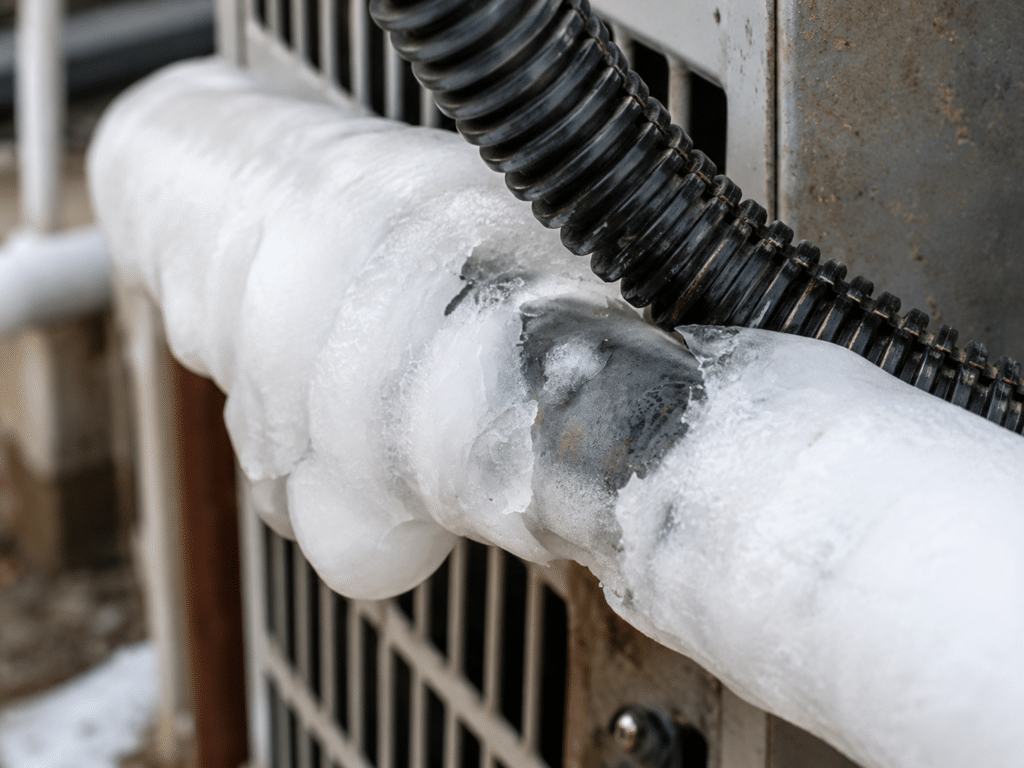
If your air conditioner has visible ice on the indoor coil, the copper refrigerant lines, or even the outdoor unit, the most common causes are restricted airflow from a dirty filter or blocked vents, low refrigerant from a leak, a dirty evaporator coil, or running the system when the outside temperature is too low. The first step is to turn the system off at the thermostat. Running a frozen AC can damage the compressor, which is the most expensive component in the entire system. Most frozen coil issues need a technician to identify and correct the underlying cause once the system has thawed.
Here is what is usually happening, what to do in the first few minutes, and when to schedule AC repair.
Quick Summary
- Turn the AC off as soon as you see ice on the coil or refrigerant lines
- The most common cause is restricted airflow from a dirty filter or dirty coil
- Low refrigerant from a leak is the second most common cause
- Never try to chip, scrape, or hose off the ice
- A frozen system that keeps running can damage the compressor
- Most cases need a technician to find and fix the underlying issue
What a Frozen AC Looks Like
Ice can show up in a few places, and where it shows up tells a technician something about what’s going on.
The most common spot is the larger copper refrigerant line where it enters the indoor unit (the air handler or the coil sitting on top of the furnace). That line should be cool and slightly damp during normal operation. If it’s wrapped in frost or a solid coat of ice, the evaporator coil inside the cabinet is almost certainly frozen too.
Sometimes ice forms on the outdoor unit, around the larger refrigerant line or even on the unit itself. That’s less common in summer and usually points to a refrigerant or pressure issue that needs a technician.
You may also notice secondary signs. Water dripping or pooling near the indoor unit as the ice begins to melt. Warm air coming from the vents even though the system is running. A noticeable drop in cooling capacity over a few hours, with the system running constantly to keep up.
First Steps When You Notice Ice
The order here matters. Doing this in the wrong order can cause additional damage.
- Turn the cooling off at the thermostat. Switch the system from “cool” to “off.” Don’t just raise the temperature setting. The compressor needs to stop running.
- Switch the fan from “auto” to “on.” Running the blower without the cooling cycle pushes room-temperature air across the frozen coil and helps it thaw faster. Without the fan running, full thaw can take six to eight hours. With the fan running, it usually thaws in two to four hours.
- Put towels around the indoor unit. As the ice melts, water can drip from places it wouldn’t normally. The condensate drain is designed for normal moisture, not a melting block of ice. Towels protect flooring and catch overflow.
- Check the air filter. Once the system has thawed and you’ve decided whether to call for service, pull the filter and look at it. If it’s clogged, replace it before restarting the AC. A clogged filter is the most common cause of frozen coils.
- Check supply and return vents. Walk through the home and confirm vents aren’t blocked by furniture, rugs, or closed dampers. Return vents (the ones that pull air back to the system) are the ones that matter most for preventing freeze-ups.
- Don’t restart the system if a technician is on the way. Let them see it in the state it’s been operating in. If you’ve decided to wait until business hours and the system has fully thawed and you’ve replaced the filter, you can try running it briefly. If it freezes again within a few hours, the issue is bigger than airflow.
The Most Common Causes
Restricted airflow. The single most common cause. When not enough air moves across the evaporator coil, the refrigerant inside drops below freezing and the moisture in the air condenses and freezes onto the coil. Causes include a dirty filter, blocked return vents, a dirty evaporator coil, a failing blower motor, or undersized ductwork that can’t move enough air for the system.
Low refrigerant from a leak. The second most common cause. Refrigerant is sealed in the system, and when it leaks out, pressures drop. Lower pressure means lower temperature inside the coil, which causes freezing. Topping off refrigerant isn’t a fix. The leak has to be located and repaired, and the system has to be recharged to manufacturer spec.
Dirty evaporator coil. Even with a clean filter, the coil itself can accumulate a layer of dust, biofilm, or debris over time. That layer insulates the coil and disrupts airflow at the fin level. The coil runs colder than it should and ice forms. A technician can clean the coil during a service visit.
Failing blower motor or capacitor. If the blower is running slower than it should, airflow drops and the coil can freeze. The system may seem to be running normally otherwise, which makes this one harder to spot without measurement tools.
Outside temperature too low. Running the AC when outdoor temperatures drop below roughly 60 to 65 degrees can cause freezing, because the system isn’t designed for those conditions. This is more of a spring or fall issue in North Jersey, but a chilly summer night with the system running hard for daytime humidity control can occasionally cause it.
Closed dampers or zoning system issues. Homes with zoned systems can develop airflow problems if too many zones close at once, restricting return air. A control board issue or a stuck damper motor will cause the same problem.
Condensate drain backup. A clogged condensate line doesn’t directly cause freezing, but it can shut down the system through a safety float switch. The bigger concern with frozen coils is what happens when they thaw. If the condensate line is also clogged, melted ice has nowhere to go and can spill out of the unit, causing water damage.
What Not to Do
- Don’t chip or scrape the ice. The evaporator coil is made of thin aluminum fins that bend easily. Damaged fins reduce efficiency permanently and can puncture the refrigerant lines.
- Don’t use a hair dryer or heat gun to speed things up. Concentrated heat can warp the coil and damage nearby plastic components.
- Don’t pour warm water on it. Water can short out electrical components in the air handler and cause issues that didn’t exist before.
- Don’t keep running it. Every hour a frozen system continues to operate puts strain on the compressor. Compressor replacement is typically the most expensive single repair on a residential AC.
- Don’t add refrigerant yourself. Refrigerant handling requires EPA certification, and adding refrigerant without locating the leak only delays the same problem.
When to Call a Technician
Most frozen coil situations need a technician. Even if a dirty filter is the obvious cause, a system that’s frozen once usually shows other signs of being out of spec. A service visit confirms what caused it and catches anything else that needs attention.
Call for service the same day if you notice:
- The system freezes again within a few hours of thawing
- You hear hissing or bubbling sounds from the refrigerant lines
- You see oil spots near the indoor or outdoor unit (a sign of refrigerant leakage)
- The outdoor unit is hot to the touch or sounds unusually loud
- You see water damage around the indoor unit
- The compressor short-cycles or struggles to start after thawing
- The system is more than ten years old and has frozen for the first time
For homes in towns like Sparta, Newton, Morristown, Parsippany, Madison, Denville, and Vernon, frozen coil calls spike during the first sustained stretch of mid-80s and 90-degree weather. Service schedules fill quickly during those weeks. Calling early in the morning usually gets a same-day appointment.
What a Technician Will Typically Check
A frozen coil service visit usually includes:
- Inspection of the filter, ductwork, and return airflow
- Visual inspection of the evaporator coil for dirt, debris, or damage
- Refrigerant pressure check against manufacturer specifications
- Leak detection if pressures are low
- Blower motor and capacitor testing
- Inspection of the condensate drain line and float switch
- Inspection of zoning controls and damper operation if applicable
- Temperature split measurement across the coil once the system is running normally
The repair itself depends on what’s found. Cleaning a coil, replacing a filter, or correcting airflow is straightforward. Locating and repairing a refrigerant leak is more involved and may require accessing the line set or replacing a section of the coil itself.
How Maintenance Prevents Frozen Coils
The majority of frozen coil calls trace back to issues that show up months earlier. Filters get dirty gradually. Evaporator coils accumulate dust slowly. Refrigerant leaks start as small drops in pressure before they reach the point of freezing the system. A seasonal AC tune-up catches those changes before peak demand hits.
For North Jersey homeowners, a yearly cooling tune-up is the single best preventative measure against summer breakdowns. It usually includes coil cleaning, refrigerant pressure check, filter inspection, and electrical testing. The Service Partner Plan handles the scheduling automatically and includes priority service when something does need repair during peak season.
Why This Happens More in North Jersey Summers
A few local realities make frozen coils more common here than in drier climates.
Humidity loads in Sussex, Morris, and Warren County run high from late June through August. AC systems work harder to pull moisture out of the air, which puts more stress on borderline equipment. A system that runs fine in mild weather can tip into freezing territory during a humid stretch.
Older homes in towns like Newton, Branchville, and parts of Morristown sometimes have ductwork that was originally sized for heating only. The return air capacity isn’t always adequate for cooling, which is the exact condition that causes coil freezing under load.
Lake-effect humidity around Sussex County’s lake communities can push systems beyond their rated capacity on the hottest weeks of summer. Systems that haven’t been maintained tend to be the first to freeze when conditions get extreme.
Frequently Asked Questions
How long does it take a frozen AC to thaw?
With the system off and the fan set to “on,” most frozen coils thaw in two to four hours. Without the fan running, full thaw can take six to eight hours. Once the system is fully thawed and the cause has been addressed, normal operation can resume.
Can a frozen AC fix itself?
The ice will melt once the system is off, but the underlying cause won’t fix itself. If you don’t address what caused the freeze (dirty filter, low refrigerant, dirty coil, airflow issue), it will almost always happen again within a few days or weeks.
Is a frozen AC dangerous?
The ice itself isn’t dangerous, but running a frozen system can damage the compressor, and melting ice can cause water damage if the condensate drain is clogged. Refrigerant leaks should be handled by a licensed technician because of EPA regulations and safe handling requirements.
Why does my AC freeze in summer but not in spring?
Summer humidity and heat make the system work harder. Marginal issues like a slightly dirty coil, slightly low refrigerant, or slightly restricted airflow don’t cause freezing during mild conditions, but the same issues tip into freeze territory under summer load.
Will the freeze damage my AC?
One freeze caught quickly usually doesn’t cause lasting damage. Repeated freezes, or running a frozen system for hours, can damage the compressor and other components. The sooner the system is shut off and the cause addressed, the better.
When to Reach Out
If your AC has frozen up, the most useful next step after shutting the system off is scheduling a service visit. A technician can identify whether the cause was airflow, refrigerant, or something else, and confirm the system is back to operating within spec before peak demand returns. Willco has served homeowners across Sussex, Morris, and Warren County since 1988, and same-day appointments are often available during cooling season.
To schedule an AC repair visit or ask about a seasonal tune-up, request a service appointment through the contact page or call the office directly.