
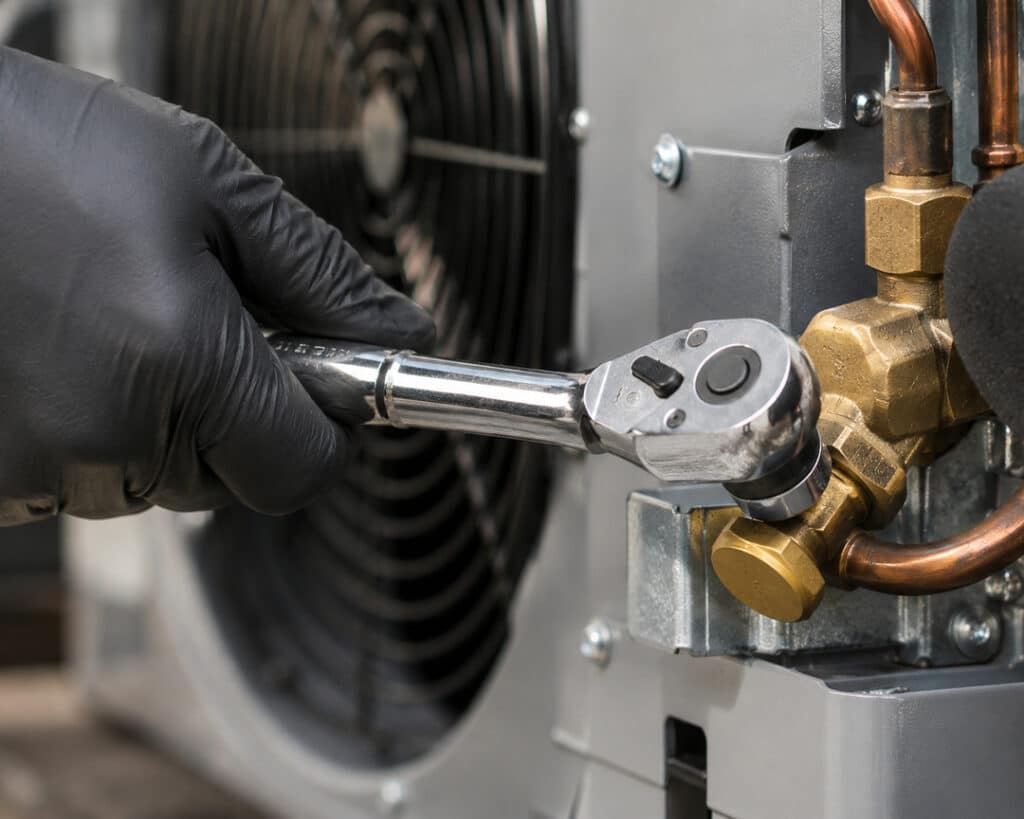
Deciding whether to repair or replace an air conditioner usually comes down to four factors: age, repair cost, energy efficiency, and how reliable the system has been over the past two summers. As a general rule, if the system is under 10 years old and a single repair costs less than half the price of a new unit, repair usually makes sense. If the system is 15 years old or older, has needed multiple repairs in the past two years, or uses outdated R-22 refrigerant, replacement is often the better long-term decision.
This is one of the harder calls a homeowner has to make. A new central air conditioning system is a real investment. So is paying for repair after repair on a system that is on its way out. Here is how to think through it.
Quick Summary
- Under 10 years old and one-time repair under half of replacement cost: repair
- 10 to 14 years old: weigh repair cost, efficiency, and recent reliability
- 15+ years old: replacement is usually the better long-term call
- Uses R-22 refrigerant: replacement is typically more cost-effective than repair
- Multiple service calls in the last two seasons: replacement should be on the table
The 50 Percent Rule, and Why It Isn’t the Only Rule
The most common rule of thumb in the HVAC industry is simple. Multiply the repair cost by the age of the system in years. If that number is greater than the cost of a new system, replace. If it’s less, repair. A 14-year-old AC needing a $400 repair gives you 14 x 400 = $5,600, which is well under the cost of a new central system, so repair likely makes sense.
That formula is a useful starting point. It is not the whole picture. The factors below often shift the decision one way or the other.
Factor 1: System Age
Central air conditioners are typically built for 12 to 17 years of service in North Jersey. The variance depends on installation quality, maintenance history, and how hard the system has run. Once a system passes 12 years, parts get harder to source, efficiency has usually dropped by 20 percent or more from when it was new, and the next breakdown is more likely.
If your system is under 10 years, repair is almost always the right call. If it’s 10 to 14, you’re in the gray zone. If it’s 15 or older, even a manageable repair often buys you only another season or two.
Factor 2: Repair Cost Compared to Replacement Cost
Compressor failures, evaporator coil leaks, and condenser fan motor replacements are the major repairs that often push a system into the replacement conversation. A new compressor on an aging system can run into four figures and still leave you with a 15-year-old unit that’s three SEER ratings behind current models.
Replacement cost depends on the size of the home, the type of system, ductwork condition, and what equipment tier you choose. The right way to weigh this is to get a real number from a technician who has been on-site, not a guess from a search result.
Factor 3: Refrigerant Type
R-22 refrigerant, the standard in older central air conditioners, has been phased out under federal regulation. New production stopped in 2020, and the limited recycled supply has driven prices high. For a system that uses R-22 and develops a leak, the cost of repair plus refrigerant often approaches what a homeowner would pay toward a new system. If your AC was installed before 2010, ask the technician what refrigerant it uses before approving any leak repair.
R-410A is also being phased out. Under the EPA’s American Innovation and Manufacturing (AIM) Act, manufacturers stopped producing new residential split system equipment using R-410A as of January 1, 2025. New systems now use lower-GWP refrigerants such as R-454B (used by Lennox and several other major manufacturers) or R-32. Existing R-410A systems can still be serviced, but refrigerant cost is expected to rise as supply tightens. This is another factor to weigh when an older system needs a major repair.
Factor 4: Efficiency and Operating Cost
Cooling efficiency is measured in SEER (Seasonal Energy Efficiency Ratio). A 15-year-old central AC might have a SEER rating of 10 or 11. Current minimum efficiency standards for new equipment in the northern United States are SEER2 13.4, and high-efficiency models go well above that. The difference shows up on summer electric bills.
For a North Jersey home running cooling roughly four to five months out of the year, a SEER jump from 10 to 16 can meaningfully reduce summer electric costs. That savings doesn’t pay for the new system on its own, but it changes the math when paired with rebates and avoided future repairs.
Factor 5: Rebates, Financing, and Tax Credits
Replacement timing often makes sense to align with available programs. The federal Energy Efficient Home Improvement Credit (Section 25C), which covered qualifying HVAC upgrades, expired on December 31, 2025. Homeowners with installs completed before that date can still claim the credit on their 2025 taxes filed in 2026, but new 2026 installs are not eligible for that specific federal credit. State and utility-level programs remain active. New Jersey’s Clean Energy Program continues to offer rebates for qualifying heat pumps and other high-efficiency equipment, and Lennox runs seasonal manufacturer rebates that can reduce equipment cost meaningfully. Financing options are also available to spread the cost over time. A good HVAC company will walk you through which programs apply to your specific home and system choice at the time of your evaluation.
Factor 6: Comfort and Reliability
Sometimes the system is technically running, but the home isn’t comfortable. Uneven cooling, high humidity, noisy operation, or constant cycling can all point to a system that is undersized, oversized, or aging out of its useful range. If you’ve been living with a comfort problem for a few summers, replacement might solve more than just the immediate repair.
When Repair Is Usually the Right Call
- System is under 10 years old
- The repair is a single component (capacitor, contactor, fan motor) under a few hundred dollars
- The system has otherwise been reliable
- It uses current refrigerant (R-410A or R-454B)
- You’ve kept up with annual maintenance
When Replacement Is Usually the Better Call
- System is 15 years old or older
- Repair cost is more than half of the cost of a new system
- Compressor or evaporator coil has failed
- The system uses R-22 refrigerant
- You’ve had two or more major repairs in the past two seasons
- Summer electric bills have crept noticeably higher year over year
- Cooling has been uneven or insufficient for multiple summers
What’s Involved in Replacing a Central AC
A typical replacement project includes a load calculation to confirm the right system size, equipment selection (often paired with a coil and air handler match), refrigerant line set evaluation, ductwork inspection, electrical and breaker review, and the install itself. Most residential replacements in North Jersey take one to two days. A good installer will walk through warranty, post-install commissioning, and what to expect during the first cooling cycle.
Ductless mini-split systems and heat pumps are also worth asking about, especially for homes with older or undersized ductwork, additions that don’t tie into the main system, or homeowners interested in cooling-and-heating in a single system.
Local Context for North Jersey Homes
Replacement timing in North Jersey tends to follow a few seasonal rhythms. Spring is the most common window for planned replacements because it avoids the peak demand of summer and gives the system a full season to break in. Late fall is a strong window for installation pricing and lead times. Mid-summer replacements happen when a system fails outright, and same-day or next-day install is often possible during cooling season for homes in the service area.
Frequently Asked Questions
How long should a central air conditioner last?
Most central AC systems in North Jersey last 12 to 17 years with regular maintenance. Heavy use, skipped tune-ups, and poor airflow shorten that range. Light use and consistent maintenance can extend it.
Is it worth replacing a 10-year-old AC?
Usually no, unless the repair cost is high or the system has had multiple recent failures. A 10-year-old system in good condition typically has several years left and is often worth repairing for routine issues.
How much does central AC installation cost in New Jersey?
Installation cost varies widely based on home size, system type, ductwork condition, and efficiency tier. The honest answer is a range, and the only way to get a real number is an on-site evaluation. A reputable HVAC company will provide a written estimate after assessing the home.
What is R-22 refrigerant, and why does it matter?
R-22 is the refrigerant used in older central AC systems. Production was phased out in 2020 under federal regulation, and the recycled supply is expensive. Systems that use R-22 are often more cost-effective to replace than to repair when leaks develop. R-410A, the standard for most of the past two decades, is also now in phase-out: new equipment manufactured after January 1, 2025 uses lower-GWP refrigerants like R-454B or R-32.
Can I just replace the outdoor unit and keep the indoor coil?
Usually not. Mismatched indoor and outdoor components reduce efficiency, can void manufacturer warranties, and often don’t perform as rated. A proper replacement matches both halves of the system to work together.
When to Reach Out
If you’re weighing repair against replacement, the most useful next step is a system evaluation from a technician who can assess the actual condition of your equipment, confirm the refrigerant type, and walk through repair and replacement options with real numbers. Willco serves homeowners across North Jersey, and can provide a written estimate so the decision is grounded in your specific home and system.
To schedule a system evaluation, request a service appointment or ask about replacement options through the contact page.